
Audience & nostalgia / Research & design
Your Buyers Are Gamers: What Gaming Demographics and Retro Nostalgia Mean for Brand Activations
A buyer’s job title describes their work, not what they enjoy after hours. Explore what U.S. gaming and nostalgia research can—and cannot—tell event marketers, then turn familiar play into a clear, original product story.
The short answer: business titles do not describe the whole person
A visitor leaves a technical presentation, checks a project message, then pauses by your booth. Their title describes their work, not what they enjoy after hours. They may play phone puzzles, strategy games, console adventures, or old favorites with their children. “Our audience is too senior for games” deserves a closer look: which interaction respects their time and helps them understand the product?
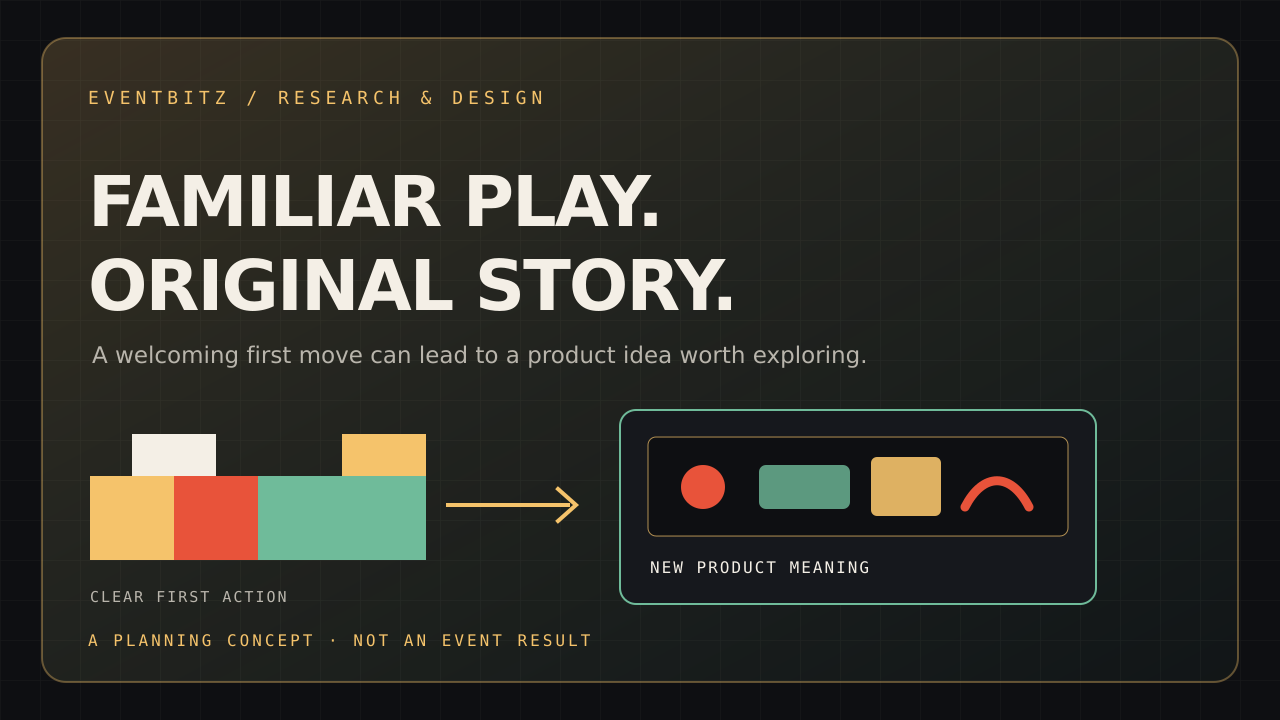
A trade-show game needs an understandable first move, a short round, and a clear product connection, not a visitor who calls themselves a gamer. Familiar play can make the invitation recognizable; original art, rules, and feedback can make the experience specific to the brand. That is the practical starting point for B2B event engagement.
U.S. data show weekly play across adult generations, while a separate B2B survey describes the age mix of business buyers. Neither measures gaming among trade-show buyers. They support testing audience fit rather than ruling out play by job title or age.
Gaming is mainstream across adult generations and devices
The Entertainment Software Association’s 2026 Essential Facts report, conducted with YouGov, says 212.3 million U.S. residents ages 5–90 play at least one hour weekly: 67% of that age range. The reported mean player age is 37. Within-generation weekly-play rates are 71% for Millennials, 56% for Gen X, and 50% for Boomers. These are rates within each generation, not each generation’s share of all players (ESA/YouGov, 2026).
Mobile is used by 80% of players, though people use more than one platform. ESA also reports 7.2 million more weekly U.S. players than in 2025. That is an absolute year-over-year count change, not a retro-game growth rate or projection.
Play includes phone puzzles, strategy, console adventures, family games, and arcade challenges. Design the booth activity around the action it asks of a passerby, not an imagined expert player.
On small screens, scroll horizontally to read the chart labels.
of U.S. residents ages 5–90 report at least one hour of weekly play.
ESA / YouGov · 2026years is the reported mean age of a U.S. video-game player.
ESA / YouGov · 2026of players use mobile devices; the figure does not mean mobile is their only platform.
ESA / YouGov · 2026The weighted online YouGov panel included 13,545 U.S. residents surveyed February 11–25, 2026. ESA is an industry trade association, and the reported 5–90 age range includes children. Treat the figures as a population snapshot, then learn about the people who attend your event.
What B2B buyer research adds—and what it cannot tell us
Forrester analyst Naomi Marr reports that Millennials and Gen Z made up 64% of business buyers at manager level and above in the firm’s 2025 Buyers’ Journey Survey. That offers current buying-group context, not evidence about any individual’s hobbies (Marr, 2026).
Forrester and ESA surveyed different populations. Their percentages cannot be multiplied to estimate gaming among business buyers, and neither predicts whether someone will stop at a booth. Ask about interaction preferences and observe whether people play, watch, or walk on.
of manager-level-and-above business buyers in Forrester’s 2025 survey were Millennials or Gen Z.
Forrester · Buyers’ Journey Survey 2025of surveyed monthly console and PC gamers in the U.S. and U.K. found remakes or remasters appealing.
MTM · 2025 · selected gamer sampleRetro appeal is not the same as replaying an old game
Separate an old game, played in original form or through a port, from a remake or remaster that revisits a specific title. A retro-inspired activation borrows broad cues—clear objectives, chunky shapes, a score, a short round—while using original mechanics, art, sound, and product meaning.
MTM’s 2025 report surveyed 1,500 monthly console and PC gamers, 750 each in the U.S. and U.K. It also included 16 AI-assisted qualitative follow-ups. In the survey sample, 76% found remakes or remasters appealing and 85% had played one without playing the original. That suggests a familiar structure can work without recognition of a particular vintage title (MTM, 2025).
The findings concern remakes and remasters among monthly console/PC gamers, not all adults or trade-show activations. They do not establish a rising retro trend. The design question is whether a familiar invitation helps this audience start while an original product story gives them something new to discover.
Borrow broad interaction patterns, not protected characters, logos, music, level layouts, or distinctive art. Build a new world and mechanic around the approved message.
Nostalgia is about personal meaning, not just pixels
A pixel grid or eight-bit sound can signal a period; nostalgia is personal meaning attached to memories of places, people, and shared routines. Two visitors may see the same style as recognition, a clear design, or nothing familiar.
Wulf and colleagues’ 2018 article integrates nostalgia research with video-game studies and proposes a research agenda. It describes nostalgia as a predominantly positive, social, past-oriented emotion. It is a conceptual synthesis, not an event experiment or proof that retro styling improves brand recall (Wulf et al., 2018).
Do not assign nostalgia by age, gender, job title, or generation. Ask whether the style feels welcoming and whether the rules are clear. A visitor may enjoy an original world, a quick challenge, or watching a score change without sharing any childhood reference.
Use a familiar invitation to introduce a new product idea
In four experiments, van Tilburg, Sedikides, and Wildschut found that nostalgic reflection could support creative prose in writing tasks, with openness considered as a mediator (van Tilburg et al., 2015). Hotchin and West compared nostalgic, positive, and novel autobiographical memories with ordinary memories in two experiments (N=144 and N=269). In the first study, nostalgia exceeded the ordinary-memory condition on reported state openness; positive and novel memories also mattered, and nostalgia was not uniquely higher in every comparison (Hotchin & West, 2021). These were reflection studies, not branded-game or buying experiments.
For an activation, a recognizable first action may lower the effort of starting and leave room for a product idea to become the interesting part. Treat that as a testable design judgment, not an “open-mindedness switch.” Does the first move make sense? Does the feedback reveal a product idea? Can staff connect it to a real use case?
On small screens, scroll horizontally to read every step.
A match-three action might introduce the idea of grouping compatible capabilities, then invite a representative to ask which matter most in the visitor’s environment. The metaphor should clarify, not oversimplify, the real workflow. If the feedback does not make the connection visible, explain the product separately or choose another format.
Match the experience to people and setting, not age stereotypes
Ask what kinds of play people know, what makes them stop, and what they want from an event interaction. Focus on behavior and access, not guesses about what an age group remembers.
Scroll horizontally to compare the prompts →
| Experience someone may mention | Useful question | What not to assume |
|---|---|---|
| Arcade or early console | Which clear objective or short challenge feels familiar? | That they remember the same game, or want its art and sound copied. |
| Couch play with family or friends | Would playing, watching, or taking turns suit this event? | That a group activity is always more comfortable than solo play. |
| Handheld or online play | Which controls feel natural, and how much setup is acceptable? | That experience transfers to an unfamiliar device or booth screen. |
| Phone puzzles | Would a one-minute touch interaction fit the visitor’s time? | That phone users want to scan a code or install anything. |
| Contemporary games—or no games | Would they rather play, watch, ask a question, or skip the activity? | That a player label is required for curiosity or product interest. |
Ask: “What would make you stop for a one-minute interaction?” “Would you play on a phone, use a booth control, watch, or talk?” “What is frustrating about the problem this product addresses?” “What would you want to know before sharing contact details?”
Test with people resembling the audience and with varied game experience and access needs. Ask them to explain the goal before you do. Offer a way to watch, talk, or decline; a choice not to play is feedback about the interaction, not the person’s product interest.
Five original activation concepts to adapt and test
These are hypothetical starting points, not existing client projects or tested outcomes. Each uses a broad play pattern with new art and language. The product team should approve the mapping before it becomes a game.
01 / SERVICE PORTFOLIO
Stack the service toolkit
- Product message
- A portfolio combines services that solve different parts of a customer’s task.
- Player action
- Drop clearly labeled building blocks into a balanced structure, choosing which capability to place next.
- Watcher role
- Watchers can suggest a piece or notice which sections are incomplete.
- Accessible option
- Offer a slower turn-based version with larger controls and no time penalty.
- Staff question
- “Which part of this stack would your team need first?”
02 / WORKFLOW ROUTE
Route the next step
- Product message
- A workflow helps a team choose an appropriate next action as conditions change.
- Player action
- Guide a marker through a short route by selecting one of a few plain-language options at each stop.
- Watcher role
- Watchers can compare the available options and explain what they would prioritize.
- Accessible option
- Make every route choice available with keyboard, touch, and untimed selection.
- Staff question
- “Which step is hardest to coordinate in your current process?”
03 / FEATURE MATCH
Pair a need with a capability
- Product message
- Different product features address different customer needs.
- Player action
- Match three short need cards to capability cards, then see a concise explanation of the selected set.
- Watcher role
- Watchers can read the choices with the player and compare their own priorities.
- Accessible option
- Use high-contrast text, generous hit areas, and a non-timed match mode.
- Staff question
- “Which of those needs is most relevant to your team right now?”
04 / COOPERATIVE SIGNALS
Build a shared signal
- Product message
- Several roles can contribute information to a clearer shared view.
- Player action
- A player selects useful signals while a partner chooses context; the screen combines both into a simple outcome.
- Watcher role
- Observers can discuss which signal changes their interpretation before taking a turn.
- Accessible option
- Allow solo play with both choices, and keep collaboration optional rather than required.
- Staff question
- “What information would you want to share across those roles?”
05 / PRODUCT LAUNCH
Give a retro-style launch a modern reveal
- Product message
- A new capability builds on a familiar task but changes what a team can do next.
- Player action
- Complete a short original arcade objective, then reveal the modern capability behind one game rule.
- Watcher role
- Watchers can guess which product idea the ending will reveal.
- Accessible option
- Provide a watch-and-read route with the same explanation and no score requirement.
- Staff question
- “What changed in your process that made this capability useful?”
For each concept, check that the visual metaphor stays accurate. If a workflow is more nuanced than a route, say so in the debrief. If two features do not actually work as a bundle, do not reward matching them together. If the visitor cannot see the product relationship without a staff explanation, improve the feedback or choose a clearer message.
Let the game, giveaway, and conversation do different jobs
A game can invite a short action, a giveaway can provide a worthwhile takeaway, and a conversation can connect the experience to the visitor’s work. None replaces the others: a prize does not prove product understanding, and a game does not guarantee a qualified conversation.
Scroll horizontally to compare every column →
| Component | Its job | A useful test | Common tradeoff |
|---|---|---|---|
| Game | Invite a voluntary action that can make one product idea tangible. | Can a visitor explain the goal and the product connection? | Round length, controls, space, readability, staffing. |
| Giveaway | Offer an item with independent value to the recipient. | Would the intended audience find it useful without a contest? | Budget, shipping, inventory, eligibility and prize rules. |
| Conversation | Hear the visitor’s question and decide whether a relevant next step exists. | Did both people learn something useful? | Staff time, privacy, follow-up, and a clear handoff. |
| Combination | Use each step to support a distinct purpose. | Can the visitor choose how to participate and understand what follows? | More steps can create queues or obscure what produced an outcome. |
See the giveaway ideas guide, games-versus-giveaways guide, and Booth Play guide for prize roles and display/mobile setups. Choose by audience, staff capacity, and event rules.
Brief the audience, the action, and the test
Start with the audience and product task, then decide whether a game fits and what an event team can learn.
- Describe audience and context. Which roles attend, what tasks do they handle, and how much time can they spare? Do not substitute age for those answers.
- Choose one approved message. State it plainly and identify what is metaphor versus a product claim. Have subject-matter reviewers approve the mapping.
- Set a round length to test. Observe starts, completions, queues, and abandonment under real booth conditions; duration is a design variable.
- Design the first action and ending. Check whether the objective is clear and what staff can ask next without a forced pitch.
- Plan access and choice. Check contrast, readable type, controls, language, and alternatives to scanning, registration, or competition.
- Plan staffing and follow-up. Decide who welcomes, explains, answers, and handles prizes; explain any data collection before opt-in.
Keep outcomes separate: clarity is understanding the invitation; completion is reaching the ending; enjoyment is a reported response; sponsor recall names the host; product understanding explains a capability; qualified conversations meet a documented business definition.
Use the event’s privacy and consent plan. A registration, score, or booth visit is not purchase intent. Define pipeline and revenue attribution separately; a small event observation rarely isolates one game as a sale’s cause.
What these sources do—and do not—establish
ESA/YouGov measures U.S. play, Forrester reports a separate B2B buyer sample, and MTM surveyed monthly console/PC gamers. None measures gaming prevalence among trade-show buyers or the results of a brand activation.
Nostalgia research includes conceptual work and experiments using writing or autobiographical reflection. It does not show that retro styling changes a buyer’s openness to sales messaging. Pilot with the intended audience: check first-action clarity, product-message accuracy, and choices to play, watch, or opt out. Report who participated and what the test did not measure.
Audience-fit checklist
- Describe the audience by role, task, event context, and product familiarity.
- Offer a short, readable action; do not require a “gamer” identity.
- Use familiar patterns as an invitation, not as a copied franchise.
- Give original product-specific art, rules, and feedback their own identity.
- Include a way to watch, ask, skip, or participate without a score.
- Review the message with product experts and representative visitors.
- Measure clarity, completion, enjoyment, recall, understanding, and conversations separately.
- Keep giveaway rules, privacy, accessibility, staffing, and follow-up clear.
Frequently asked questions
Are B2B buyers too old for games?
Age alone is a poor reason to rule out play. U.S. data show weekly gaming across adult generations, but they do not predict the preference of a particular buyer. Ask about the event audience and offer an easy, optional way to engage.
Why use a retro-inspired trade show game?
A simple, familiar structure can make the first action easy to recognize. Use original art and mechanics to express the product story. Test whether the audience understands both the game and its connection to the product.
Will everyone feel nostalgic about a retro style?
No. Nostalgia depends on personal memory. Some visitors may enjoy a clear challenge or attractive design without a nostalgic response; others may not want to play. Design for choice and clarity rather than a shared memory.
How can we connect the game to our brand?
Give the product idea a meaningful role in the objective, feedback, or ending. Use an original visual world, then invite a booth conversation that explains the accurate product connection. Check the mapping with subject-matter reviewers.
Can a game work with useful swag?
Yes, when the game, item, and staff conversation have distinct jobs. A giveaway can be worthwhile on its own; a game can invite participation; the conversation can address the visitor’s needs. Measure each part separately.
Methods note
This research-informed studio article summarizes public reports and journal articles alongside original hypothetical concepts. EventBitz did not conduct field research for it; examples are not client case studies or measured outcomes.
References
- Entertainment Software Association. (2026, June 3). 2026 Essential Facts About the U.S. Video Game Industry. Conducted with YouGov. Report findings; ESA methodology and release summary.
- Marr, N. (2026, April 24). “Digital Natives Are Rewriting B2B Buying — And It’s Impacting Your Revenue Performance.” Forrester. Reporting the firm’s Buyers’ Journey Survey, 2025. Article.
- MTM. (2025). Remake vs Innovate: Is the past the future of gaming? Survey of monthly console and PC gamers in the United States and United Kingdom. Report PDF.
- Wulf, T., Bowman, N. D., Rieger, D., Velez, J. A., & Breuer, J. (2018). “Video Games as Time Machines: Video Game Nostalgia and the Success of Retro Gaming.” Media and Communication, 6(2), 60–68. https://doi.org/10.17645/mac.v6i2.1317.
- van Tilburg, W. A. P., Sedikides, C., & Wildschut, T. (2015). “The mnemonic muse: Nostalgia fosters creativity through openness to experience.” Journal of Experimental Social Psychology, 59, 1–7. https://doi.org/10.1016/j.jesp.2015.02.002.
- Hotchin, V., & West, K. (2021). “Reflecting on nostalgic, positive, and novel experiences increases state Openness.” Journal of Personality, 89(2), 258–275. https://doi.org/10.1111/jopy.12580.