
The EventBitz Blog · Behind the Build
How we build custom event games, in detail
Every game we ship starts as a conversation about what a client wants booth visitors to remember, and ends as a finished arcade game running on a big screen in front of a crowd. This blog walks through that whole path: the brief, the design, the code, the playtesting, and the delivery, using two real builds as the examples.
No client names, no trade secrets. Just the craft, explained the way we would explain it to you on a call.
The process, stage by stage
Brief. We start with your event, your audience, and the one thing you want visitors to walk away remembering. A game built for engineers at a tech conference plays differently from one built for buyers at a retail expo, and the brief is where we pin that down: the message, the products or services in focus, the booth setup, and how long a visitor can realistically play.
Concept. Within two to five business days you get a direction you can actually react to, usually a playable concept build, not a slide deck. Seeing the game move changes the conversation. Feedback gets specific fast, and specific feedback is what makes the final game good.
Design. This is where your product story becomes game mechanics. Services turn into game pieces. Process steps turn into levels. Your approved copy and questions get written into the game at the points where players are paying the most attention. We design the whole booth loop here too: the attract screen that pulls people in, the round length that keeps the line moving, and the leaderboard that keeps the crowd watching.
Build and review. We build the game in the browser, so it runs anywhere with no install. You play every version we send, and we tune together: speed, difficulty, scoring, wording. Nothing in the game is generic by the time it ships, because you have approved the copy, the questions, and the look at each pass.
Event ready. Before the show we test the exact setup you will run: a laptop, an HDMI cable, and your display, the same way you would run a slide deck. On event day our team is standing by during your setup time, and phone and email support are included in every package.
Two builds, walked through
How we built a custom stacking game for a corporate event
A global technology company wanted attendees to learn its service portfolio by playing with it. We turned each service into a game piece, added a bonus quiz after every round, and tuned a 90 second game loop built for a busy booth.
Read the full build story →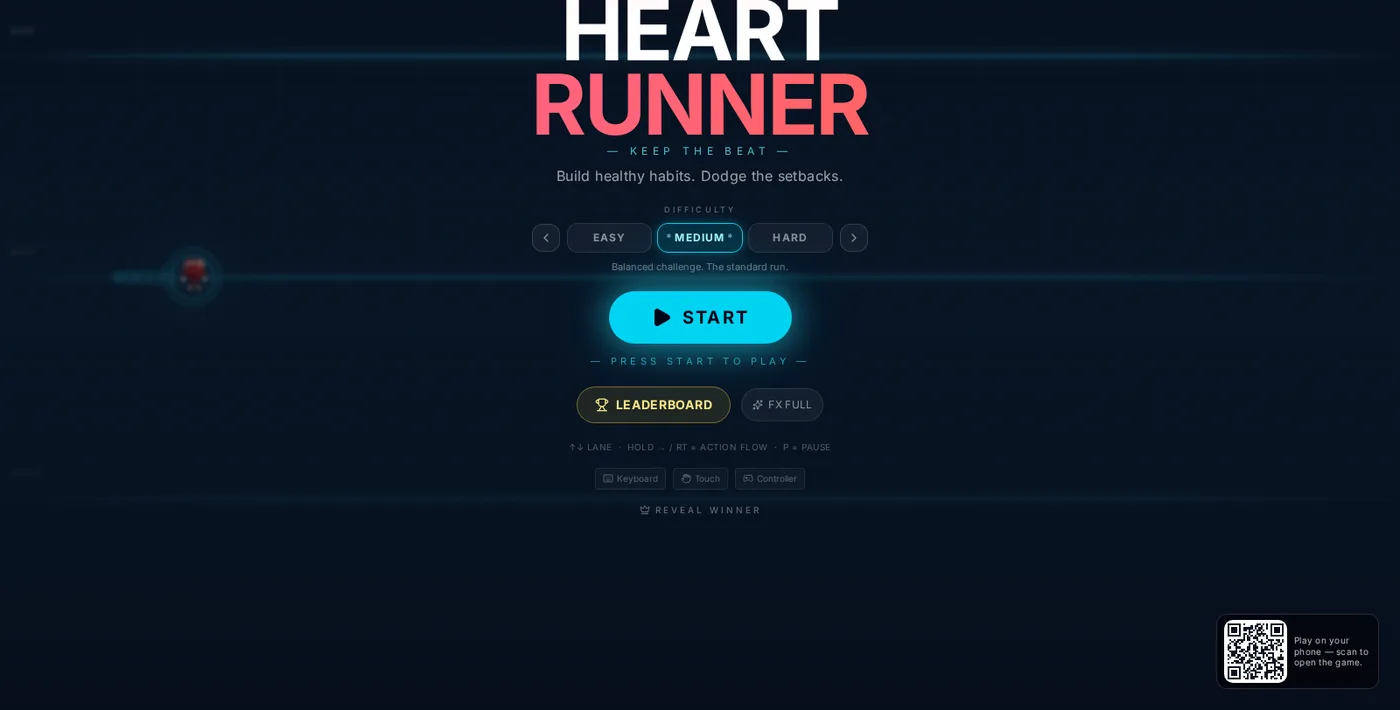
How we built a heart health runner game for events
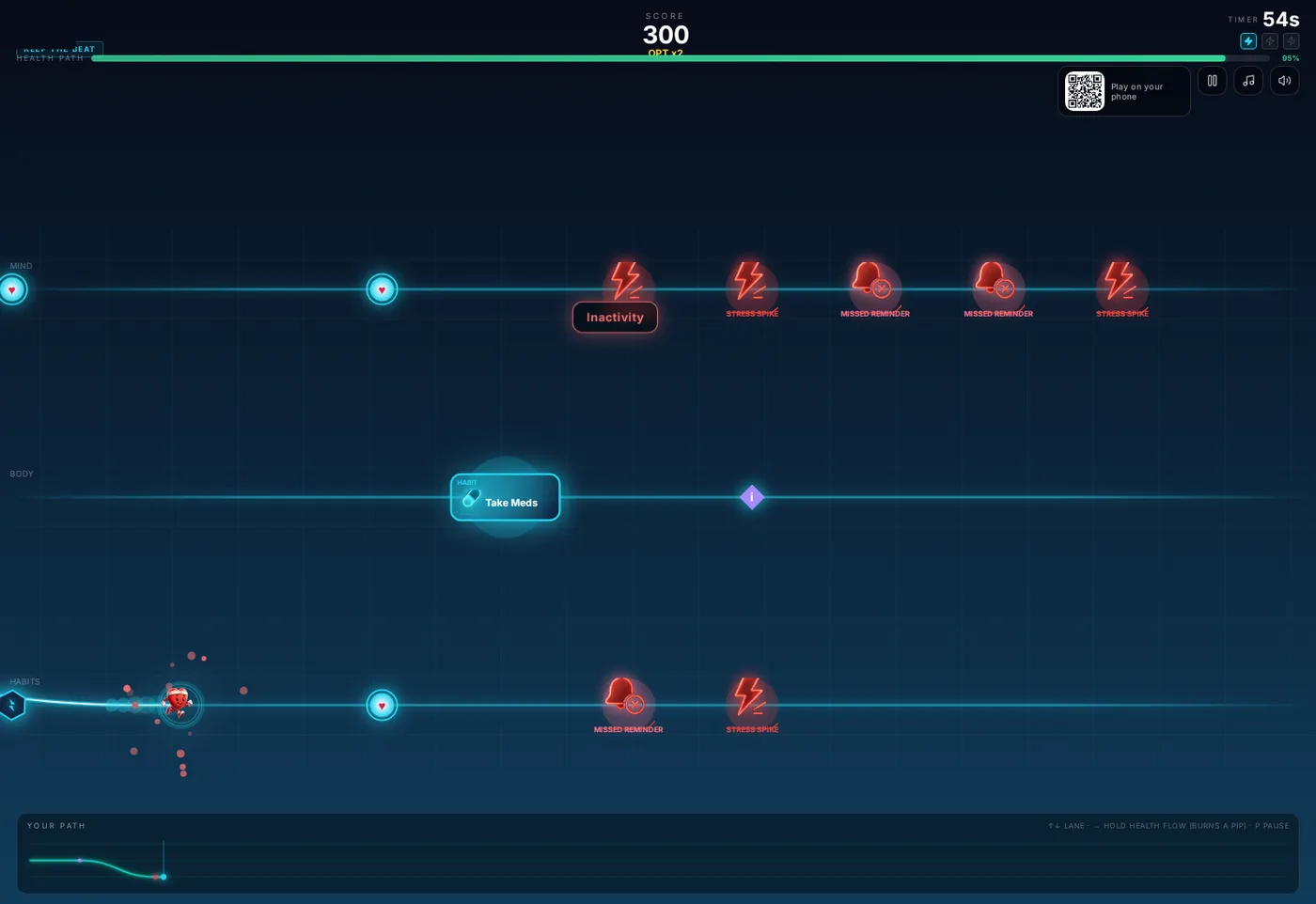
A digital heart health company wanted attendees to feel their message: small habits keep your heart on track, setbacks are normal, and the path back is always there. We built a 60 second runner on an EKG line where the habits are the treasure and the setbacks have names.
Read the full build story →Booth strategy
Why companies build games with us
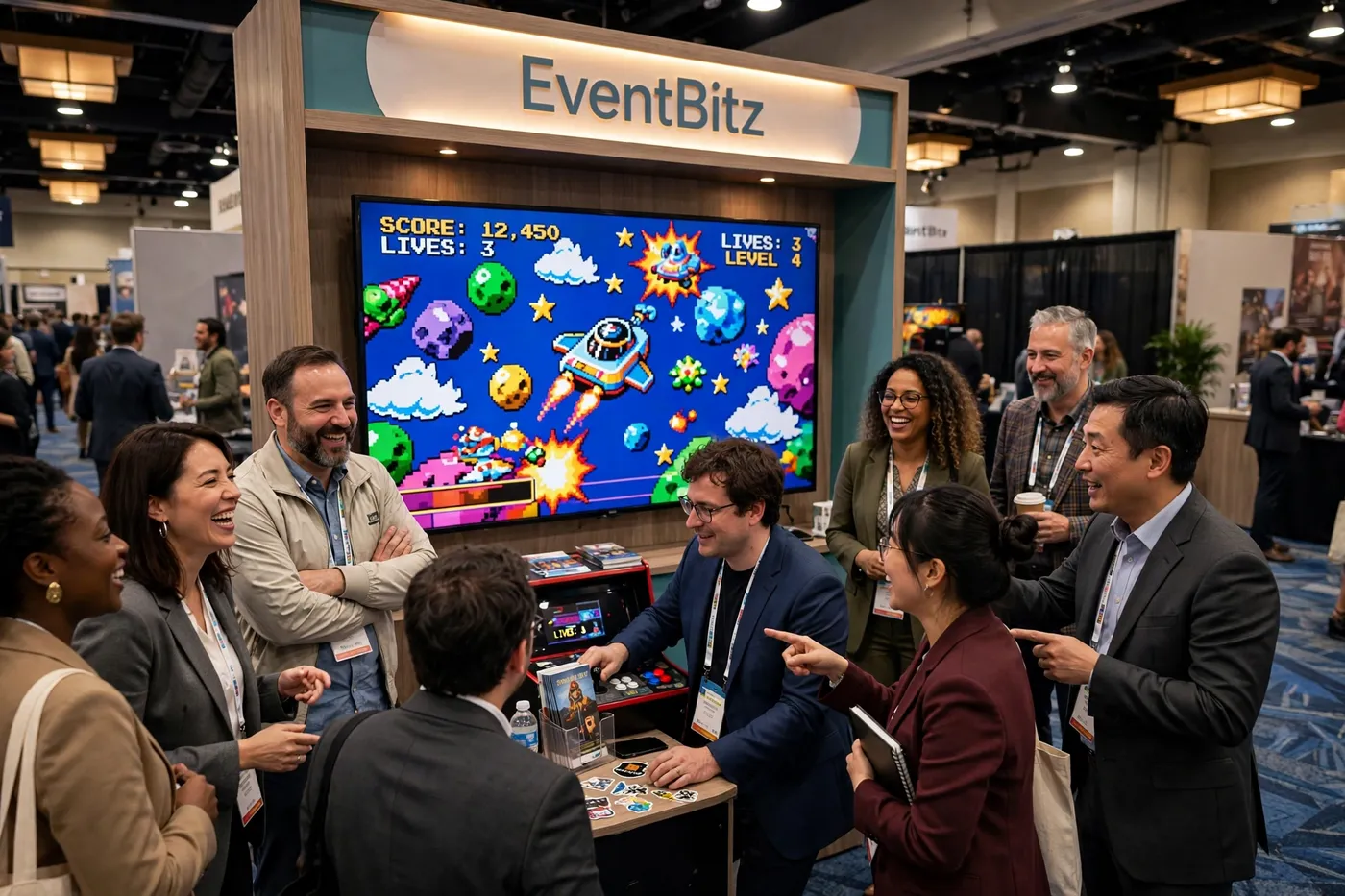
The game is the message. A brochure gets skimmed. A game gets played, watched, and talked about, and the playing itself teaches the content. When a visitor stacks your services, answers your questions, or carries a package through your process, they have rehearsed your pitch by the time a rep says hello.
Everything runs in a browser. There is nothing to install and nothing to ship except, optionally, controllers. A laptop, an HDMI cable, and a display are the whole setup, which is why our support team can honestly say that if you can run a slide deck, you can run one of our games.
You approve everything. Copy, questions, branding, and difficulty all pass in front of you before the event. The sample content in a concept build is a placeholder on purpose: your build ships with your approved messaging, aligned to the product and the audience at your show.
Built to be reused. Games are hosted for a full year and can run at multiple events. A follow-on event gets a fresh theme and fresh content on the same foundation, so the second show costs less than the first.
Common questions
- How long does a custom event game take to build?
- A rebrand of an existing game, themed to your content, typically takes two to three weeks from kickoff. A fully custom game concept takes four to five weeks. A first concept direction can usually be shared within a week of the brief.
- What do you need from us to start?
- Your brand assets, the products or services you want featured, and the message you want visitors to remember. We draft the game copy and quiz questions from your public materials, and you approve or edit everything before it is final.
- What equipment does the booth need?
- A laptop, an HDMI connection to a display, and venue wifi. Touchscreens, keyboards, and game controllers all work. An optional mobile version lets visitors scan a QR code and play on their own phones.
- Can the game capture leads?
- Yes. Players can register a name and phone number to join the leaderboard, and a high score giveaway at the end of the event gives them a reason to. The full list of captured leads is delivered to you after the event.
Tell us what visitors should remember
We will build the game around it. Start with a concept: get in touch and tell us about your event, or browse playable concepts in the game portfolio to see the quality bar for yourself.