
Booth engagement / Research & design
Trade Show Engagement Ideas That Start With Curiosity
Start with a question visitors can understand, offer a worthwhile reveal, and make it easy to play, watch, ask, or move on. This guide shares ten practical invitations and a natural staff handoff.
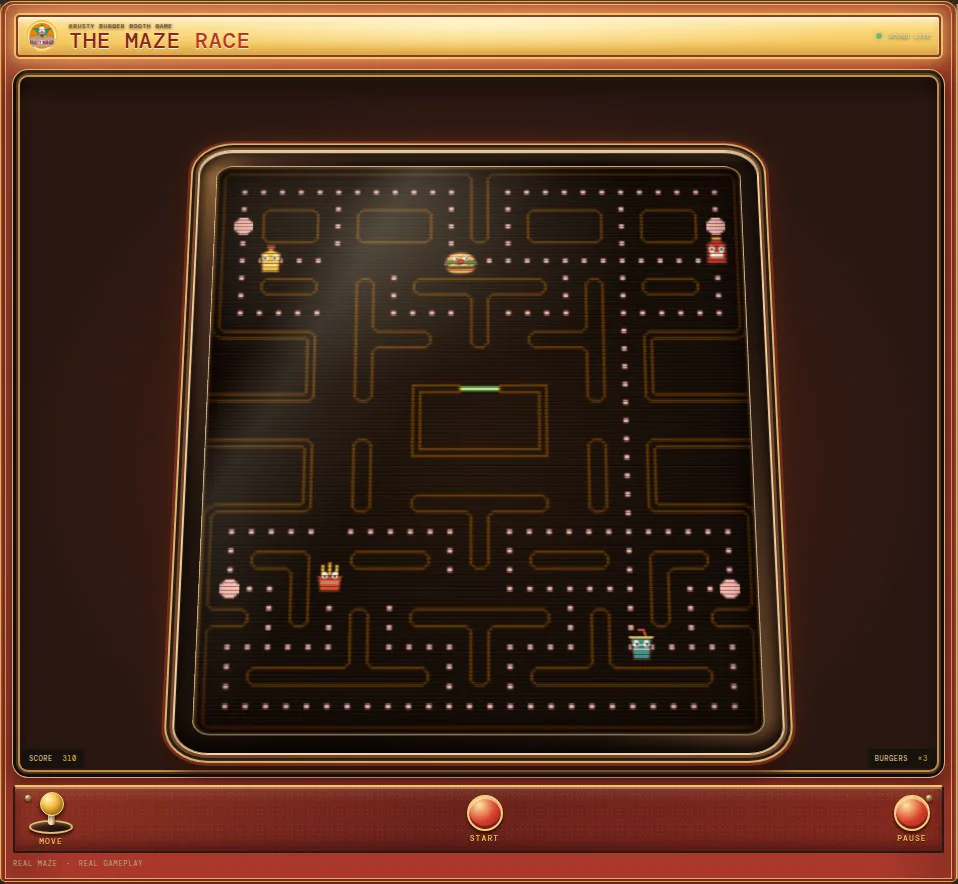
The short answer: invite, reveal, then listen
Strong trade show engagement ideas begin with a question a visitor can understand from the aisle, offer a useful reveal, and give the booth team a natural way to listen. A prompt should be clear, relevant, optional, and worth the visitor’s time, whether they continue or move on.
For each interaction, plan three parts: a question, a reveal, and a conversation. “Which route would you take?” is only useful if the visitor can see what the choice means. “Scan to find out” is not a meaningful reveal if the visitor has to provide contact information first. Keep an easy path to play, watch, ask, or leave.
The ten invitations below are original hypothetical prompts for workshop use. Adapt one to an approved product message and the actual booth setup.
What curiosity research suggests, and what it does not
A curiosity study using trivia questions found that questions participants rated as highly interesting were associated with better later memory for answers, with a smaller effect for incidental faces viewed during anticipation. It used lab memory tasks, not a trade-show booth, and did not directly measure dopamine (Gruber, Gelman, & Ranganath, 2014). The finding can motivate a testable design question: is a relevant question a better invitation than a generic command? It does not demonstrate that the sponsor or product will be remembered.
A separate advergame study examined how cognitive demand and interactivity relate to brand memory (Sreejesh & Anusree, 2017). That work studied games rather than booth invitations, so use it as a prompt to review whether a challenge focuses attention on the intended message or competes with it.
A review of curiosity research notes that definitions and experimental methods vary, and argues that information-seeking should be considered in context (Kidd & Hayden, 2015). A theoretical account describes curiosity as a perceived gap between what a person knows and wants to know; that is a way to think about an invitation, not an event intervention result (Loewenstein, 1994).
An educational interest-development framework distinguishes a momentary trigger from interest that develops over time (Hidi & Renninger, 2006). For activation planning, treat a first interaction and later interest as separate questions to observe.
Use these ideas as a design hypothesis: offer a relevant question with a legible answer, then see whether visitors choose to continue. Do not use “curiosity” to justify a hidden answer, a confusing puzzle, a forced scan, or an artificial countdown. If a person cannot tell what they will get from the interaction, the design has not created useful curiosity; it has created uncertainty.
A question, reveal, and conversation model
This three-part model is a practical planning device. It is not a validated funnel and does not imply that one stage causes the next.
On small screens, scroll horizontally to read every diagram label.
Question: Use everyday language and a meaningful choice. Reveal: answer what the prompt promised, with approved information and without requiring a lead form. Conversation: invite the visitor to connect the idea to their context, and accept that they may prefer to keep walking.
Make the question about the visitor’s work, not about whether they are a “good” prospect. “Which part of the workflow takes the longest to explain?” invites an opinion. “Are you a decision-maker?” can feel like a qualification gate. If you need to qualify a sales opportunity, do it transparently in a human conversation and use the organization’s agreed criteria.
Ten original invitations for a booth
Each row gives a possible invitation, a useful payoff, and a staff handoff. The constraints matter as much as the idea: the visitor should understand the prompt, the answer should be honest, and the next step should not be forced.
Scroll horizontally to explore all ten ideas →
| Invitation | Payoff or reveal | Staff handoff | Constraint |
|---|---|---|---|
| 1. “Which request would you handle first?” | A fictional queue changes after the player chooses. | “What makes that priority clear for your team?” | Do not suggest the game is a real scheduling tool. |
| 2. “Can you spot the missing signal?” | A scenario reveals one piece of context the player did not see at first. | “What information would you want next?” | Use approved language and avoid fake diagnostic outputs. |
| 3. “Find a route with one less handoff.” | A simple map shows how a fictional handoff changes the path. | “Where do handoffs slow your process today?” | Do not imply the route guarantees a time saving. |
| 4. “What would you protect first?” | A fictional security choice reveals a tradeoff and an approved principle. | “What would you need to know before choosing?” | It is not security advice, a test, or a vulnerability assessment. |
| 5. “Can you balance the incoming work?” | A short play loop shows demand moving between fictional lanes. | “Which capacity question is hardest for your team?” | Do not claim the score predicts staffing or demand. |
| 6. “Predict what happens next.” | The visitor makes a low-stakes prediction, then sees a reviewed explanation. | “What did you expect, and why?” | Do not make a wrong answer embarrassing or hide key facts. |
| 7. “Put the steps in order.” | An abstract sequence becomes a readable flow after one choice. | “Which step needs the most explanation?” | Only use an approved sequence; do not imply certification. |
| 8. “Can your team keep the signal in view?” | A visible target stays on screen while distractions move around it. | “What tends to distract from this priority?” | Keep text and controls accessible; do not require rapid reaction. |
| 9. “Choose one feature to explore.” | A short reveal explains one approved capability in plain language. | “Would you like the overview or a live product demo?” | Do not turn a menu into an email-capture wall. |
| 10. “Watch one round, then decide.” | A silent demo loop makes the action visible before a visitor joins. | “Would you rather play, watch, or ask about the product?” | Provide captions or a clear visual explanation without sound. |
These invitations can support a game, a touchscreen, a sample product display, or a staff-led conversation. Do not treat the list as a prescription. Choose the one prompt that matches the product story, then ask a few people outside the project team whether they understand it without explanation.
Replace vague invitations with clear ones
A playful question can be intriguing without being cryptic. The visitor should have a reasonable idea of what action is available, what they will see, and whether they need to share personal information.
Scroll horizontally to compare copy →
| Vague or pressuring | Clearer invitation | Why it is clearer |
|---|---|---|
| “Want to win big?” | “Play a one-minute challenge. You can enter the prize draw afterward.” | Names the activity, approximate commitment, and optional next step. |
| “Scan to unlock the answer.” | “Pick a route and see how the fictional workflow changes.” | Explains the action and the payoff before asking for a scan. |
| “Are you ready to prove your skills?” | “Try the challenge, or watch a round first.” | Removes social pressure and offers a spectator path. |
| “The secret is hidden in the maze.” | “Collect the signal cards, then see what they represent.” | Explains the rule without making the puzzle obscure. |
A visitor may enjoy discovering a detail, but the invitation should not conceal the cost of participation. If a QR scan opens a form, say so. If entering a giveaway requires an email, disclose the rule before play and provide the required notice. A forced scan can produce contact data while damaging trust; it is not the same as useful engagement.
Let people play, watch, ask, or leave
Not every visitor wants to participate in front of a crowd. Some may want to watch a round, ask a product question, or keep walking. The booth should support those choices without treating nonparticipants as lost opportunities. A clear game preview, a short explanation, and an unblocked path through the exhibit can make the experience feel more welcoming.
For a game, show what the controls do and how long a round generally takes. Do not depend on sound to explain the objective. Avoid score-only screens that leave visitors unsure what happened. If the game has a leaderboard or prize, explain how it works and whether any personal information is required. Provide a version that does not rely on speed or color alone where the selected format allows it.
A spectator can be part of the experience without being asked to join. A score can be visible from the aisle, a screen can show a brief demo, or staff can describe the objective. Keep the volume and motion appropriate for the space and allow staff to pause the display during a conversation.
The goal is not to maximize time spent at the booth. It is to offer a relevant path for different visitors. A 20-second question may be valuable if it gives someone the answer they need; a longer game may be a poor fit if it creates a line that blocks the exhibit or excludes a visitor who cannot use the controls.
Avoid obscurity, pressure, and forced scans
Curiosity is not confusion. An obscure puzzle may reward people already familiar with the product while leaving first-time visitors behind. A prompt that withholds essential rules can feel like a trick. A countdown can produce urgency without helping someone understand what the product does. These choices may increase interaction with the screen while weakening the conversation the booth was meant to start.
Likewise, do not use “engagement” as a reason to request data without a clear purpose. If an event has a prize draw, publish simple rules, eligibility, timing, selection method, and data use. Separate optional marketing consent from a required entry step where applicable. EventBitZ does not make a legal determination for a client’s promotion; the client’s legal and privacy teams must approve it.
Use a quick walk-up test: show the invitation to someone who has not seen the brief. Ask them to explain what they would do and what they expect to get. If they guess incorrectly, revise the copy or screen before adding more visual effects.
A set of practical prompt cards
Use these as a small workshop exercise. Each card asks the team to say what the visitor can do, what information they receive, and what a staff member can ask without assuming a sales outcome.
On small screens, scroll horizontally to read every prompt card.
These prompts do not need a digital game. A printed card, live demonstration, product sample, short video, or staff-led question can serve the same role. Choose the medium that gives the visitor a clear payoff and the team a useful response.
Measure the handoff, not just the attraction
Set measurement definitions before the event. Count what the chosen setup can actually observe, and do not convert one metric into another. A play is not necessarily a unique visitor. A QR scan is not consent. An email is not a qualified conversation. A qualified conversation is not pipeline. Pipeline is not attributable revenue.
For a small pilot, the team might observe whether visitors understand the invitation, choose to play or watch, complete the reveal, and have a follow-up conversation. If product comprehension matters, ask a neutral open-ended question. If the client tracks a lead, let the sales team apply its existing qualification standard. Report the sample, definition, event context, and missing data.
Curiosity research does not provide a trade-show conversion rate. A booth test can teach the team whether a particular invitation was clear and operable in that environment. It cannot establish broad audience preference or causal revenue without a stronger design.
Engagement invitation checklist
- Can someone understand the invitation from the aisle?
- Is the reveal relevant, accurate, and available without an unnecessary scan?
- Can a visitor play, watch, ask, or decline?
- Is the prompt specific to one audience and one product idea?
- Does the staff question invite an answer rather than qualify or pressure?
- Are game rules, prize terms, data use, and consent clear?
- Do controls, contrast, sound, text, and exit options fit varied visitors?
- Will staff be able to run the actual setup and support a queue?
- Are attention, memory, contacts, conversations, and revenue measured separately?
Frequently asked questions
What is a good trade show engagement idea?
One that fits the audience and product story, offers a clear voluntary action, and gives staff a useful next question. A game is one option; a demo, sample, question, or conversation may fit better.
How can a booth team learn what visitors remember?
Ask an unaided sponsor question and an open-ended product question separately, with the sample, wording, and timing defined in advance.
Should visitors scan a QR code to participate?
Only if the scan has a clear purpose and the visitor knows what will happen. Do not hide a form or data request behind a curiosity prompt.
How can staff turn a game into a conversation?
Ask an open question about what the visitor noticed or how the issue appears in their work. Listen before describing a product. Do not treat the score as a lead qualification signal.
How many engagement ideas should a booth use?
Start with one clear interaction and one practical alternative. Add another only when the team can explain its role, operate it, and measure it separately.
References
- Gruber, M. J., Gelman, B. D., & Ranganath, C. (2014). “States of curiosity modulate hippocampus-dependent learning via the dopaminergic circuit.” Neuron, 84(2), 486–496. https://doi.org/10.1016/j.neuron.2014.08.060
- Sreejesh, S., & Anusree, M. R. (2017). “The impacts of cognitive effort, interactivity and psychological involvement on brand equity of online games.” Computers in Human Behavior, 70, 575–588. https://doi.org/10.1016/j.chb.2017.01.033
- Kidd, C., & Hayden, B. Y. (2015). “The psychology and neuroscience of curiosity.” Neuron, 88(3), 449–460. https://doi.org/10.1016/j.neuron.2015.09.010
- Loewenstein, G. (1994). “The psychology of curiosity: A review and reinterpretation.” Psychological Bulletin, 116(1), 75–98. https://doi.org/10.1037/0033-2909.116.1.75
- Hidi, S., & Renninger, K. A. (2006). “The Four-Phase Model of Interest Development.” Educational Psychologist, 41(2), 111–127. https://doi.org/10.1207/s15326985ep4102_4