
Start here
Give the visitor one action to understand, one visible consequence and one useful question afterward. Keep the game metaphor separate from clinical evidence or product-use instruction.
Choose the conversation before the game
The public overview of CEIR's in-booth engagement research covers interactions with staff, products and learning. That is a useful planning frame: decide what the visitor should explore and which person will help them take the next step. An activity needs a place in the booth team's work, not just a screen in the floor plan.
Source: IAEE / CEIR: Effective In-Booth Tactics for B2B Exhibitions ↗
For a device team, the conversation might concern a workflow bottleneck. For a digital health team, it might concern consistency with everyday habits. Write one question a rep can ask without delivering a full product pitch. That question becomes a useful test of the game concept: will the round give the rep a natural reason to ask it?
Idea 1: Make consistency visible
Heart Runner is an original custom build: players change lanes, collect healthy choices and avoid setbacks. The heart meter responds to those choices. Stress, inactivity and missed reminders interrupt the run, while positive pickups replenish the meter.
The useful design idea is the visible consequence. A visitor can point to a moment when the run became difficult. A rep can then ask, “Which habits are hardest to keep consistent?” and listen before introducing an appropriate part of the product story.
The game uses healthy habits as a play metaphor. It is not a clinical simulator or evidence of health outcomes. A new game would use your team's approved message and brand assets.
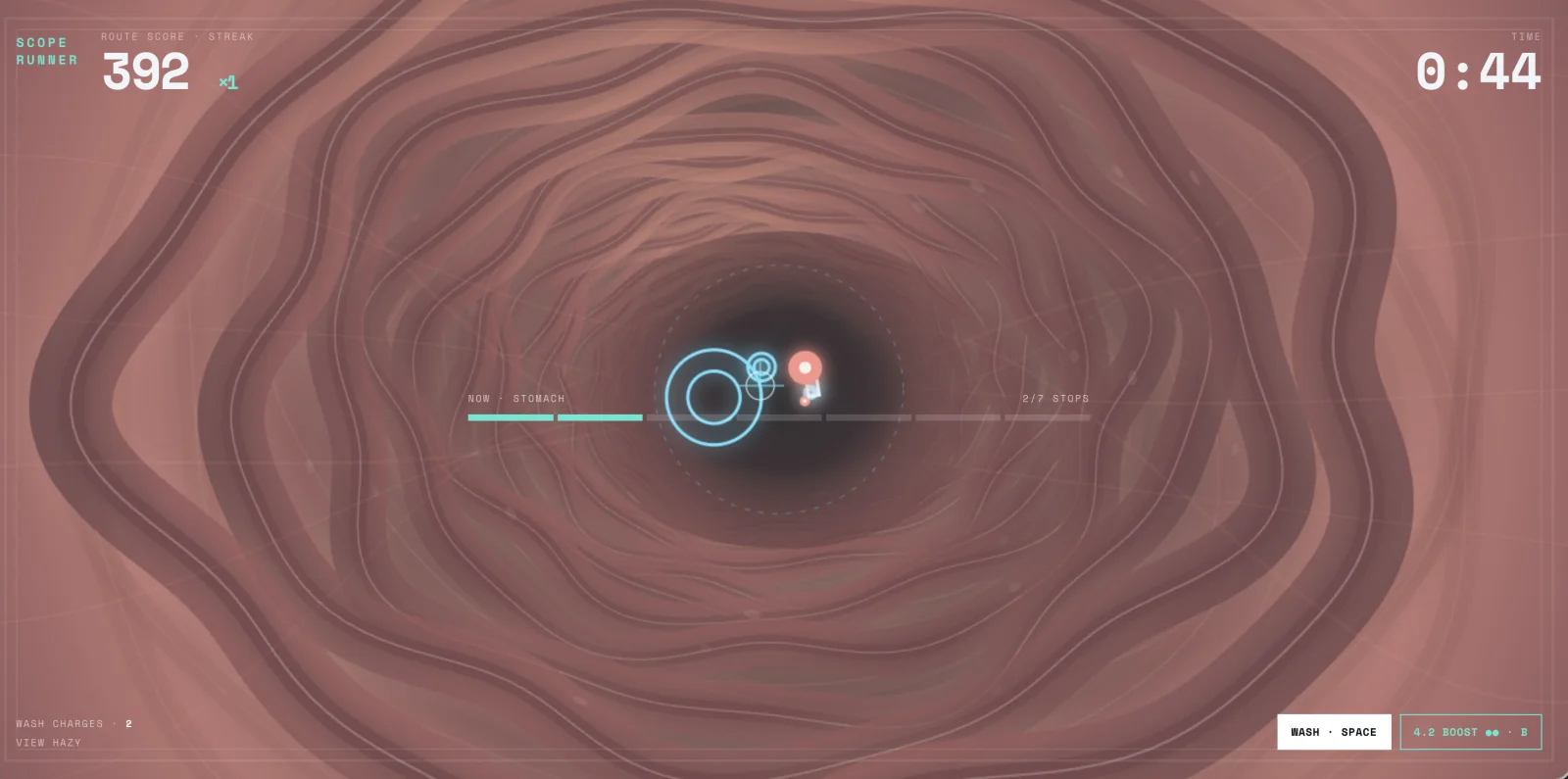
Explore the Heart Runner concept and play a round ↗Explore the Scope Code customer game example ↗Idea 2: Turn a workflow bottleneck into an obstacle
For a product whose value is easier to explain through a sequence, consider a route with a few clearly labeled obstacles. The player completes the path by making progress through the steps. This is a proposed design approach, not a claim that we have already deployed it for a medical device customer.
Keep the abstraction honest. The obstacle should represent the communication challenge you want to discuss; a game shortcut should not imply an unapproved product benefit. A useful rep question might be, “Which step creates the most friction for your team?” The answer helps the rep choose a relevant demonstration.
See the abstract Scope Code route concept ↗Idea 3: Build a short sequence challenge
If your message concerns coordination, a simple sequence or matching challenge can show how several pieces fit together. Use a small set of approved concepts so a visitor can understand the objective from a short instruction screen. The goal is to make the relationship memorable, while the booth team handles the detail.
A proposed finish screen could recap the sequence and invite the visitor to see the product. Test whether players can explain what the labels mean afterward. If they only remember the colors or the score, refine the message or the rep handoff before adding more gameplay.
Bring the reviewers into the brief
Identify the people who approve product language, imagery and the event experience before development. Give them the proposed rules, screen copy and follow-up question together. Reviewing those separately can miss the meaning created when a game action and a product statement appear side by side.
If you are considering prizes or collecting information from healthcare professionals, have your team review the plan against its policies and the event's requirements. Use the current AdvaMed Code where it applies to your organization. This guide does not determine whether a particular activation is permitted.
Source: AdvaMed: Code of Ethics, effective November 1, 2025 ↗
Design the round and the handoff together
For initial planning, try a short round with a visible start, clear controls and a finish screen that resets easily. Time the complete interaction in rehearsal: instructions, play, the first question and the transition to a rep. A 60-second game does not automatically mean sixty visitors per hour.
For illustration, a 60-second round plus 30 seconds to explain and reset gives one station a theoretical ceiling of 40 rounds per hour. That is simple capacity arithmetic, not a forecast. Conversations, breaks, accessibility needs and uneven traffic reduce the number you can actually handle. Put a staff member beside the activity and plan a place for the next conversation.
Measure whether the conversation happened
Before the show, agree what counts as a relevant conversation and who records it. Keep rounds played, unique participants where available, product conversations and follow-up requests as separate counts. A popular game can still need a better handoff; a smaller number of highly relevant conversations can be valuable.
After the event, ask the staff which questions opened a useful discussion and where players needed help. Use that feedback to improve instructions, pacing and the next version. EventBitZ develops the concept direction in 2–5 business days after receiving the brief, with development and review scheduled separately.
Plan a medtech game with EventBitZ ↗